
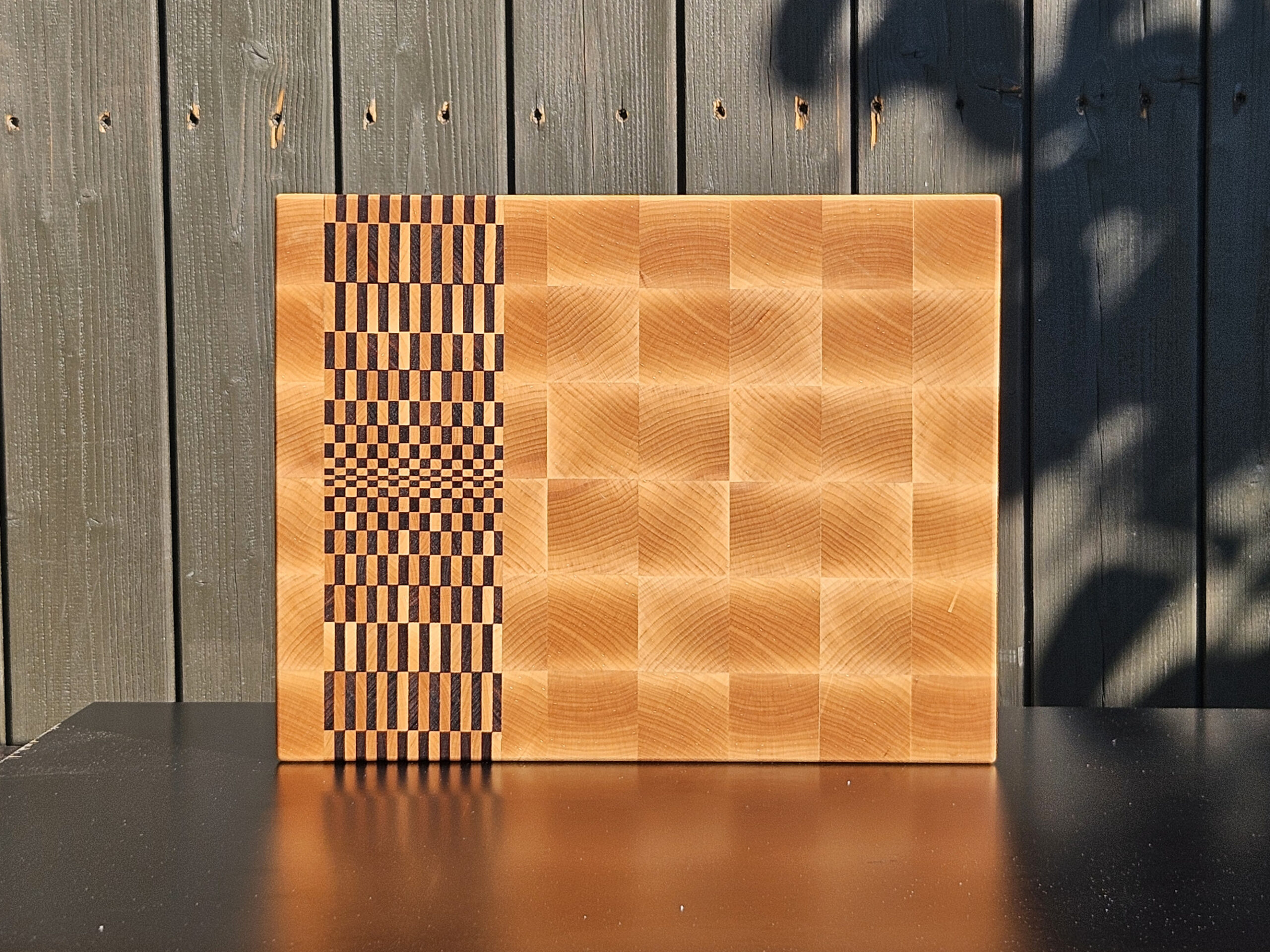
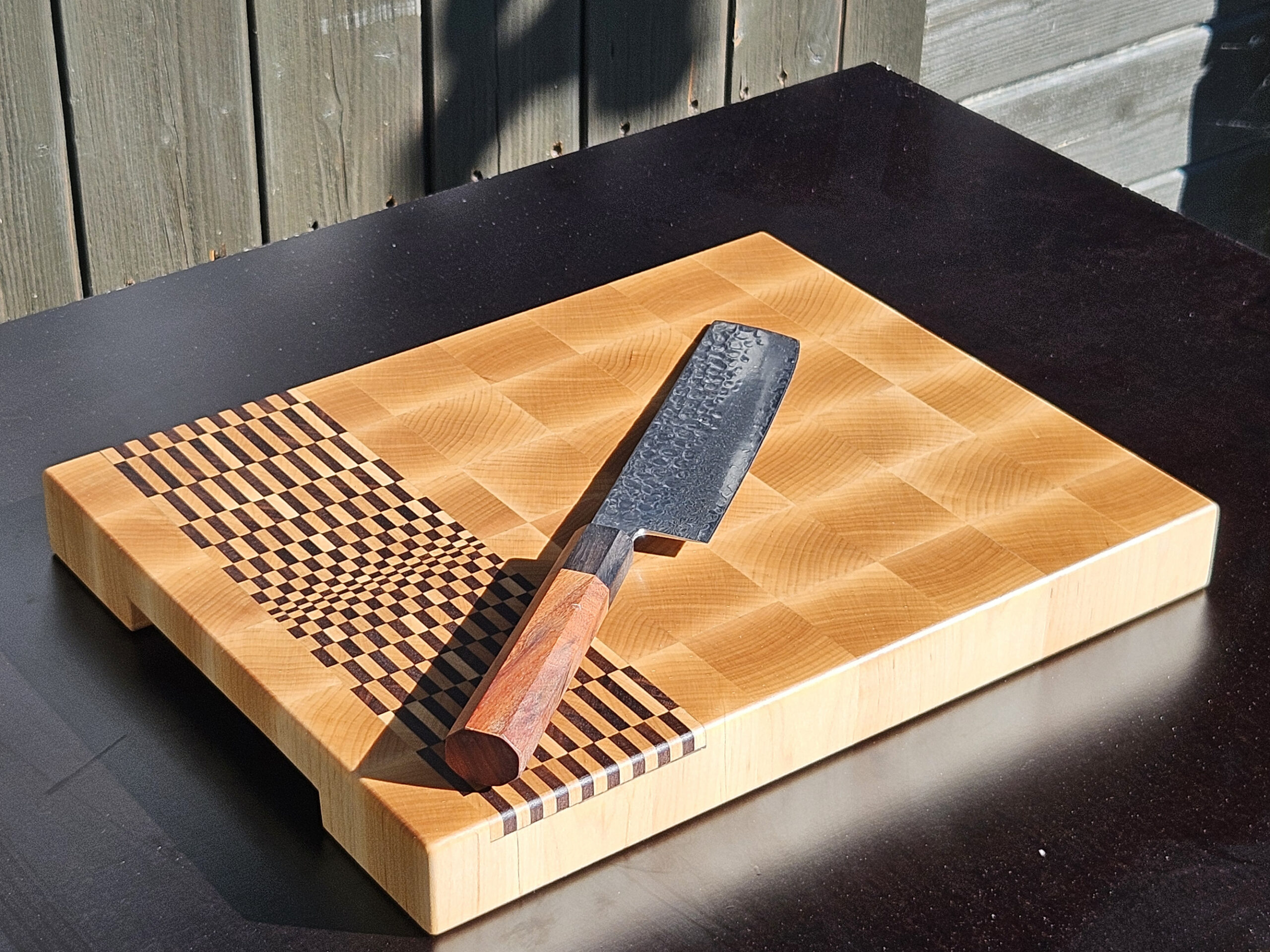
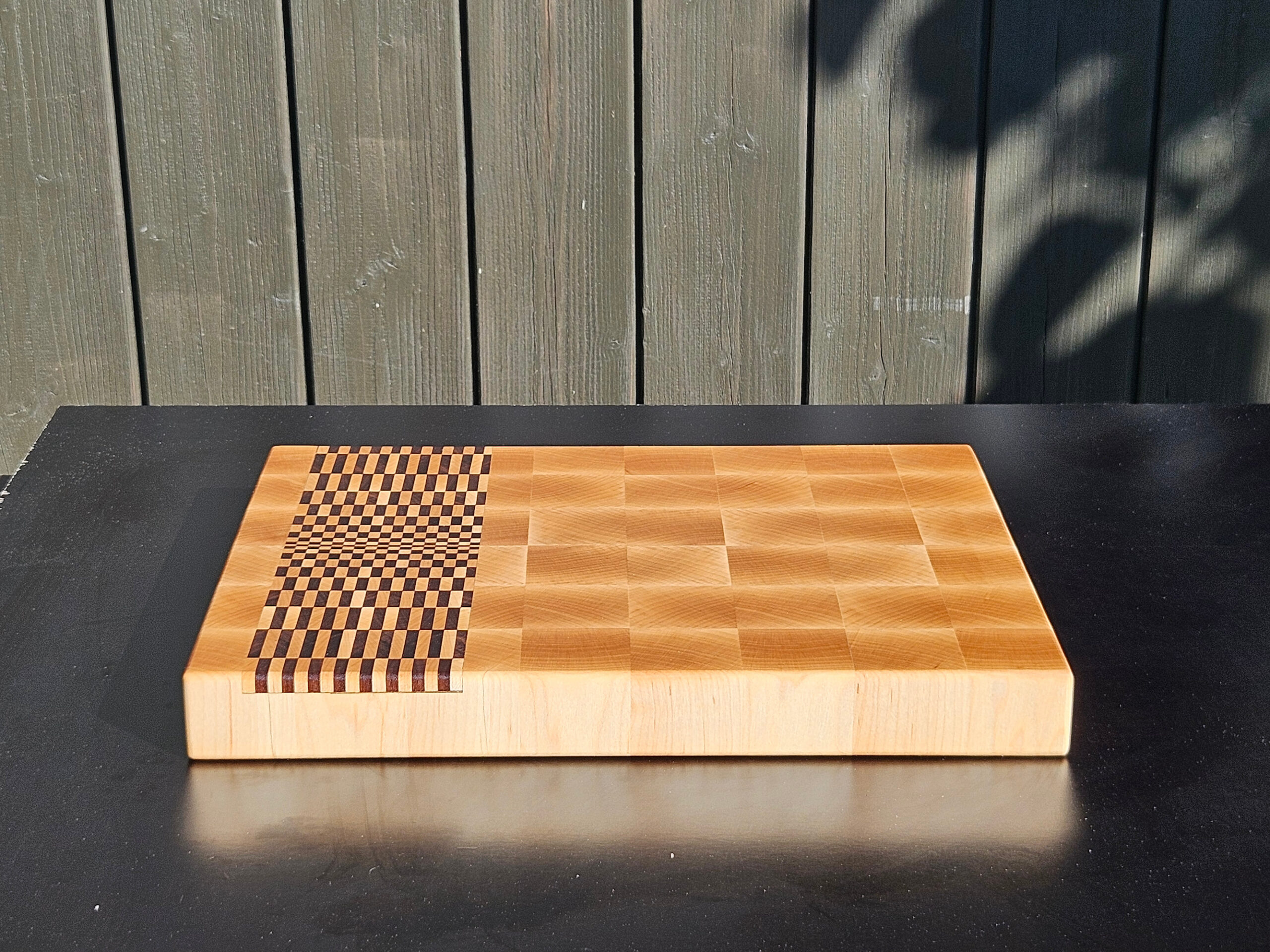
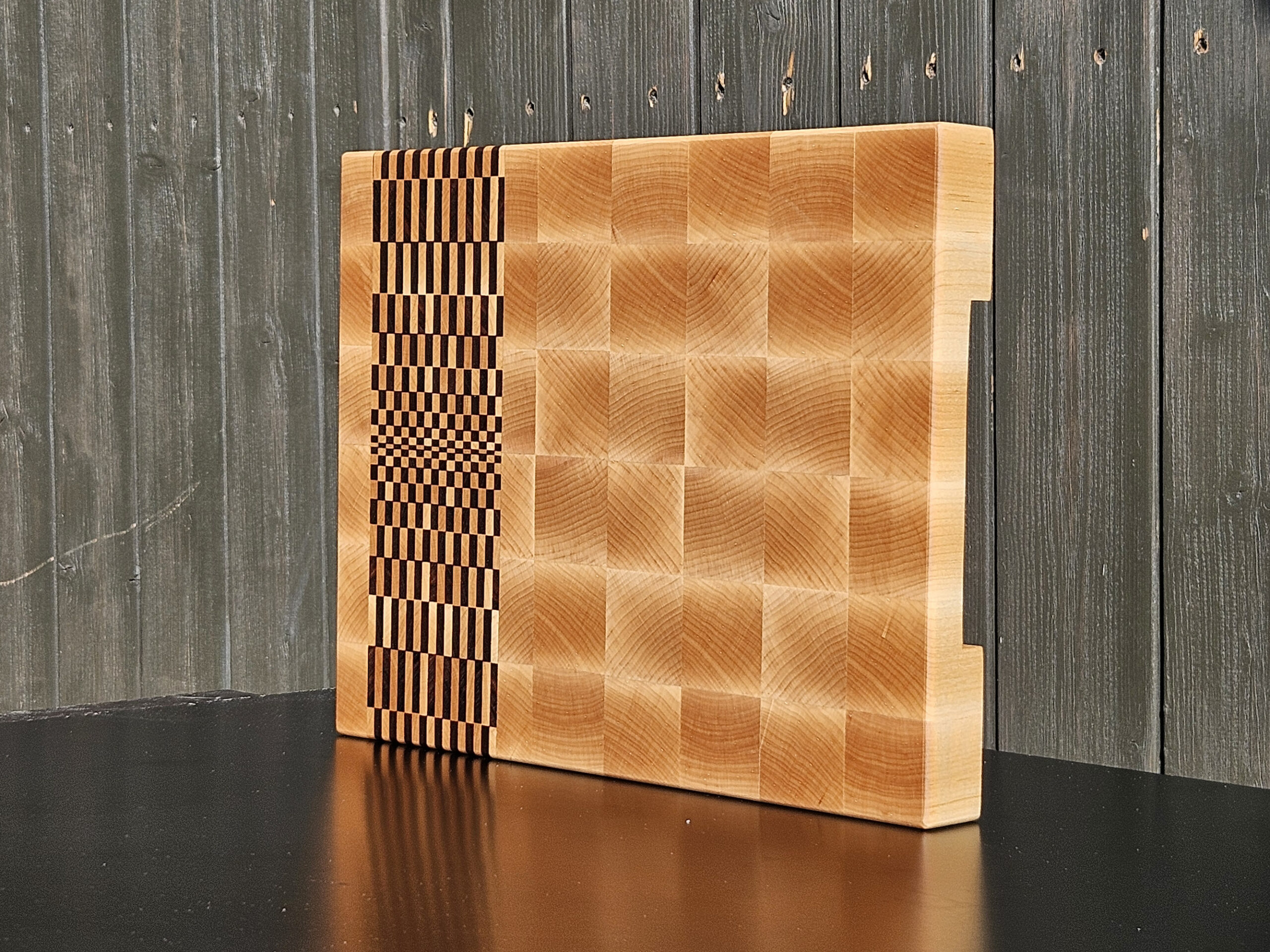
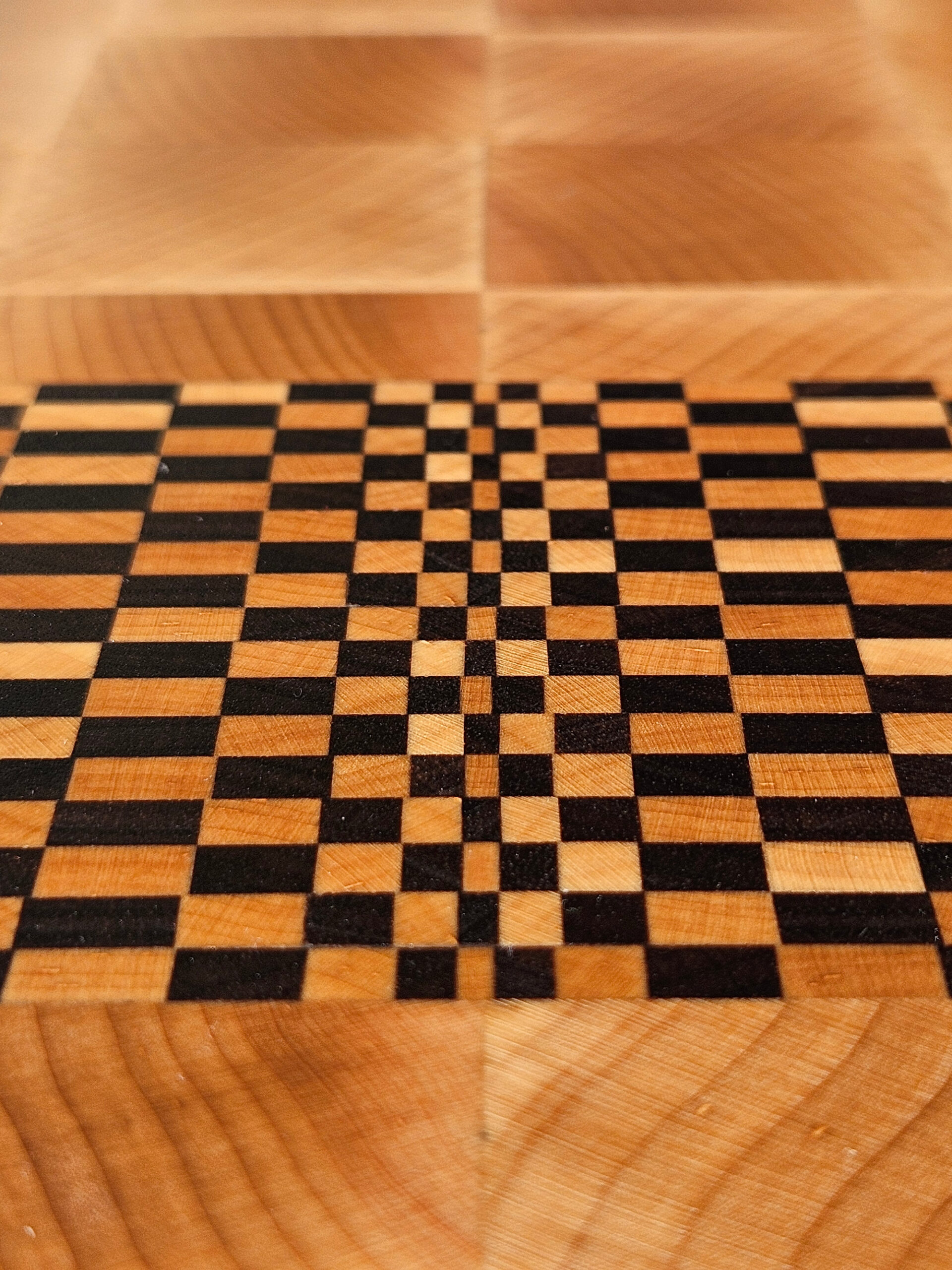
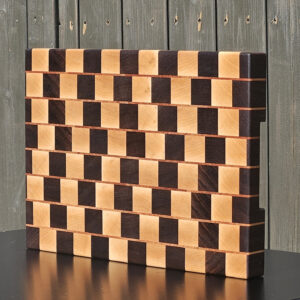
One half of this board is pure hard maple — pale, dense, end grain. The other half is something else entirely.
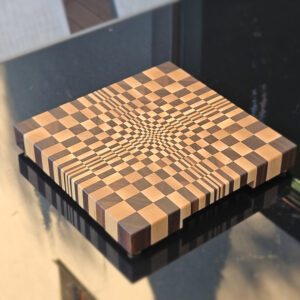
The walnut and maple butterfly inlay occupies roughly a third of the surface and creates a 3D vortex optical illusion: alternating dark and light squares arranged so precisely that the pattern appears to curve inward, pulling the eye toward a vanishing point that isn’t there. Up close, the individual pieces of end-grain walnut and maple are visible — dozens of them, cut and fitted by hand.
The rest of the board is working surface. Hard maple is one of the toughest, most close-grained woods used for cutting boards. It resists deep cuts, cleans easily, and ages well.
Why end grain? When a knife meets an end grain surface, it pushes between the wood fibres rather than cutting across them. The fibres flex and return after each cut — the board recovers rather than scars, stays gentler on blade edges, and holds up to heavy daily use better than any edge grain alternative.
The making — The butterfly inlay section demands exact geometry. Even a small error in the checkerboard alignment breaks the illusion completely. After assembly, the board goes through multiple rounds of flattening and sanding before any finish is applied. Every board leaves pre-treated with food-grade mineral oil and sealed with carnauba wax.
Optional feet — Anodized aluminum feet with anti-slip rubber rings available as add-on.
Included — Home-made board conditioner (mineral oil + beeswax) with every order.
Reviews
There are no reviews yet.